
ANSYS Lumerical 2024 R1 free download standalone offline setup for Windows 64-bit. The ANSYS Lumerical is a reliable application for analyzing and designing the photonics and electromagnetism.
ANSYS Lumerical 2024 R1 Overview
ANSYS Lumerical stands as a powerful suite of simulation tools designed to empower engineers and researchers in the field of photonics, optoelectronics, and nanotechnology. As Windows software, it brings advanced simulation capabilities to users, enabling the exploration and optimization of a wide range of optical and electromagnetic devices. This suite is particularly valuable for those involved in the design and analysis of components such as photonic integrated circuits, sensors, and communication devices.
At the core of ANSYS Lumerical is its ability to perform rigorous simulations of electromagnetic and photonic phenomena with a high degree of accuracy. Users can model complex optical structures, simulate light propagation, and analyze the behavior of light-matter interactions. The software provides a comprehensive platform for understanding the performance of devices at the nanoscale, offering insights that are crucial for the development of cutting-edge technologies.
One of the standout features of ANSYS Lumerical is its support for multiphysics simulations, where the coupling of different physical phenomena can be accurately modeled. This capability allows users to explore the intricate interactions between optics, thermal effects, and electrical behavior in a single simulation environment. Such a holistic approach is essential for designing and optimizing devices where multiple physical effects are intertwined.
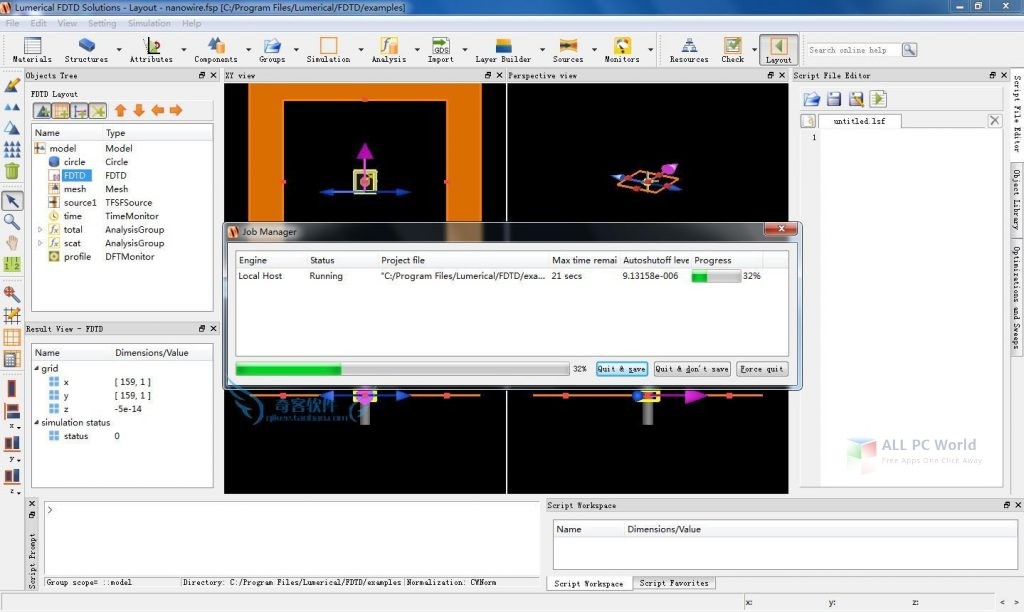
The software’s versatility extends to its capability to model a wide range of optical components, including waveguides, resonators, and photodetectors. Users can leverage the suite’s advanced simulation algorithms to analyze light propagation, evaluate the efficiency of optical coupling, and optimize the performance of their devices. This flexibility positions ANSYS Lumerical as a go-to tool for engineers and researchers working on diverse optical applications.
Additionally, ANSYS Lumerical excels in providing a user-friendly environment for designing and analyzing photonic structures. The intuitive graphical user interface (GUI) simplifies the simulation setup process, making it accessible to users with varying levels of expertise. This emphasis on user-friendliness ensures that engineers and researchers can efficiently navigate the software, saving valuable time in the simulation workflow.
Simulation results from ANSYS Lumerical are not only highly accurate but are also presented in a visually intuitive manner. The suite offers powerful visualization tools, allowing users to gain deep insights into the behavior of light within their devices. This visual feedback is crucial for making informed design decisions and understanding the impact of various parameters on device performance.
Furthermore, ANSYS Lumerical supports automation and scripting, enabling users to streamline repetitive tasks and integrate simulations into larger workflows. This feature is particularly advantageous for those engaged in iterative design processes or optimization studies, where multiple simulations need to be executed systematically.
Features
- Multiphysics Simulations: ANSYS Lumerical excels in performing rigorous simulations of electromagnetic and photonic phenomena, allowing users to accurately model intricate interactions between optics, thermal effects, and electrical behavior.
- Versatile Optical Component Modeling: The suite supports the modeling of a wide range of optical components, including waveguides, resonators, and photodetectors, offering engineers and researchers a versatile platform for designing and optimizing diverse optical applications.
- Windows Software: As Windows software, ANSYS Lumerical provides a user-friendly environment for simulation and analysis, ensuring compatibility with the widely used Windows operating system.
- High-Accuracy Simulations: Users can rely on the suite’s advanced simulation algorithms to achieve high-accuracy simulations of complex optical structures, providing valuable insights into the performance of nanoscale devices.
- Multiphysics Coupling: The software allows for the accurate modeling of multiphysics coupling, enabling users to explore the interactions between different physical phenomena in a unified simulation environment.
- Intuitive Graphical User Interface (GUI): The intuitive graphical user interface (GUI) simplifies the simulation setup process, catering to users with varying levels of expertise and enhancing the overall usability of the software.
- Visualization Tools: ANSYS Lumerical offers powerful visualization tools that allow users to gain deep insights into the behavior of light within their devices, aiding in making informed design decisions.
- Automation and Scripting: The suite supports automation and scripting, enabling users to streamline repetitive tasks and integrate simulations into larger workflows, particularly beneficial for iterative design processes and optimization studies.
- Photonics and Nanotechnology Focus: Tailored for researchers and engineers in the fields of photonics, optoelectronics, and nanotechnology, the suite is designed to address the specific challenges and requirements of these cutting-edge disciplines.
- Light-Matter Interactions: Users can simulate and analyze light-matter interactions, providing a comprehensive understanding of how light behaves within nanoscale structures and contributing to the development of advanced technologies.
- Device Optimization: ANSYS Lumerical supports the optimization of device performance, allowing users to fine-tune parameters and achieve the desired outcomes in their designs.
- Holistic Approach to Design: The suite’s support for multiphysics simulations ensures a holistic approach to design, considering the complex interplay between optics, thermal effects, and electrical behavior.
- Simulation Workflow Efficiency: With a user-friendly interface and streamlined processes, the software enhances simulation workflow efficiency, enabling users to focus on the design and analysis aspects of their work.
- Automated Task Execution: Automation features contribute to automated task execution, particularly useful for tasks requiring repetitive simulations or systematic variations in parameters.
- Iterative Design Support: The suite is well-suited for iterative design processes, where multiple simulations are performed to refine and improve device designs based on simulation results.
- Powerful Visual Feedback: The powerful visualization tools provide users with visual feedback, aiding in the interpretation of simulation results and facilitating a deeper understanding of device behavior.
- Scripting Flexibility: ANSYS Lumerical offers scripting flexibility, allowing users to customize and extend the software’s capabilities according to their specific needs.
- Impactful Parameter Analysis: The suite’s capabilities extend to parameter analysis, allowing users to study the impact of various parameters on device performance.
- Innovative Nanoscale Technologies: Supporting the design and analysis of nanoscale devices, ANSYS Lumerical contributes to the advancement of innovative technologies at the forefront of research and development.
- Seamless Integration with Windows: As a dedicated Windows software, the suite ensures seamless integration with Windows, providing users with a familiar and widely used platform for their simulation work.
Technical Details
- Software Name: ANSYS Lumerical for Windows
- Software File Name: ANSYS-Lumerical-2024-R1.rar
- Software Version: 13.2.0
- File Size: 1.84 GB
- Developer: Lumerical
- File Password: 123
- Language: English
- Working Mode: Offline (You don’t need an internet connection to use it after installing)
System Requirements for ANSYS Lumerical
- Operating System: Windows 10/8/7
- Free Hard Disk Space: 2 GB of minimum free HDD
- Installed Memory: 4 GB of minimum RAM
- Processor: Intel Multi-Core processor or higher
Download ANSYS Lumerical Latest Version Free
Click on the below link to download the standalone offline setup of latest ANSYS Lumerical for Windows x64 architecture. You can also download Comsol Multiphysics 5.3a.
File Password: 123